Essential Ingredients
- 8 oz (225g) chicken livers
- 1.5 oz (42g) bacon, chopped in cubes (about 3 thin slices, omit if strictly paleo)
- 0.1 oz (3g) garlic, minced (about 1 clove)
- 3 tbsp. (45ml) sherry or apple cider vinegar
- 4 tbsp. (15g) chopped parsley (approx. 0.25 cups)
- 8 oz (225g) large onion, diced
- 0.75 cups (170g) coconut oil, divided
- 0.1 tsp. (0.5g) sea salt
- 0.1 tsp. (0.5g) freshly ground black pepper
- 0.1 tsp. (0.5g) fresh nutmeg, if desired
Step-by-Step Directions
- Set a large pan over medium-high heat; add the 1.5 oz (42g) chopped bacon and cook for about 3 minutes.
- Stir in the 0.1 oz (3g) minced garlic, 8 oz (225g) diced onion, and 0.25 cups (56g) of coconut oil, cooking for 4 minutes more.
- Trim the 8 oz (225g) chicken livers by cutting out any tough white connective parts, and add the livers to the pot.
- Continue cooking for about 10 minutes, or until the livers are fully cooked through with no pink remaining inside.
- Stir in the 3 tbsp. (45ml) sherry, 0.1 tsp. (0.5g) black pepper, 4 tbsp. (15g) parsley, 0.1 tsp. (0.5g) nutmeg, and 0.1 tsp. (0.5g) sea salt.
- Remove the pan from the heat, transfer the mixture to a food processor or blender, and process until very smooth.
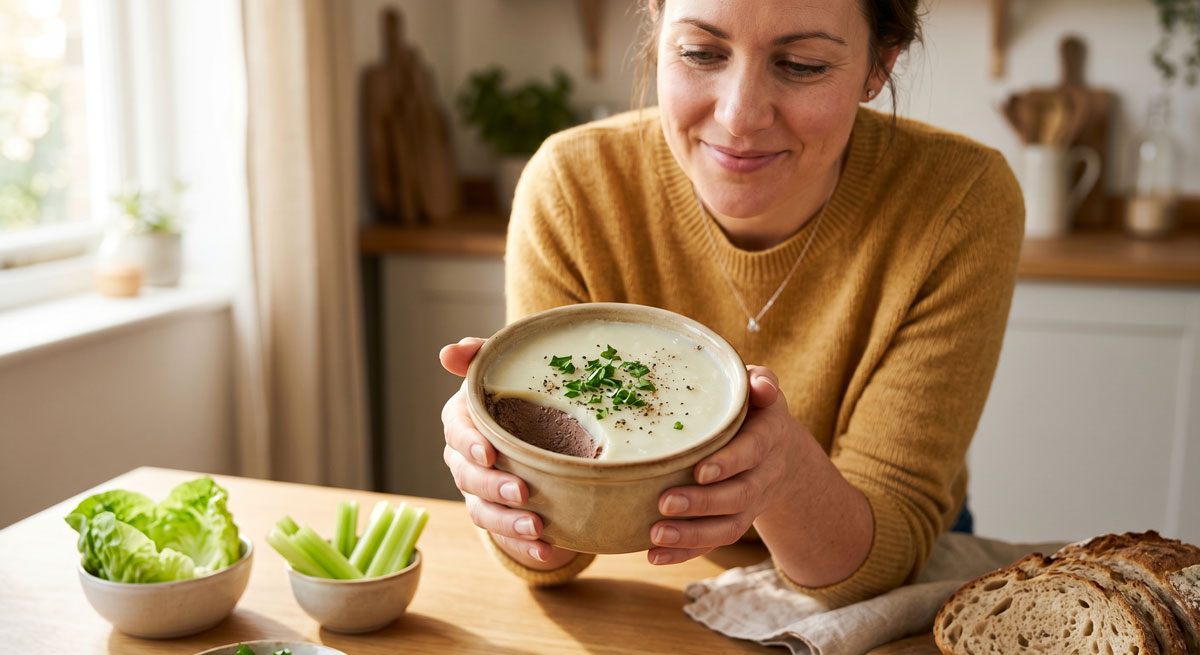
- Transfer the blended mixture to a serving dish and smooth out the top.
- Melt the remaining 0.5 cups (114g) of coconut oil and evenly pour it over the pâté to create a protective seal.
- Refrigerate, covered, until the oil layer hardens, and enjoy as a snack on lettuce leaves, on celery sticks, or as is.
Nutritional Information
(Approximate values per serving. Yields: 2 Servings)
- Calories: 1,030 kcal
- Carbohydrates: 12.2 g
- Protein: 27.5 g
- Fat: 94.5 g
Chef's Note: The high fat and calorie content comes primarily from the generous protective coconut oil seal and the rich bacon fat, making this an incredibly satiating, keto-friendly energy booster.
Pro Tips
To elevate this simple 5-minute prep dish into a restaurant-quality appetizer, keep these expert chef secrets in mind:
- Do Not Overcook the Livers: For a silky, creamy texture, cook the livers just until they lose their pinkness in the center. Overcooking liver leads to a grainy, crumbly texture and a harsh, metallic flavor.
- Soak in Dairy or Acid (Optional): If you are sensitive to the strong flavor of liver, soak the raw livers in almond milk (or regular milk if not strictly paleo) with a splash of lemon juice for 30 minutes before cooking. This neutralizes the sharp, metallic taste.
- Master the Fat Seal: The melted coconut oil poured over the top isn't just for presentation; it acts as an airtight seal. This prevents the pâté from oxidizing (turning gray) and significantly extends its shelf life in the fridge.
- Let the Flavors Marry: While you can technically eat it once the oil hardens, pâté tastes infinitely better on day two. Letting it rest in the refrigerator for 24 hours allows the sherry, garlic, and nutmeg to deeply infuse the spread.
Frequently Asked Questions (FAQ)
These questions are structured to capture high-intent search traffic and are perfect for implementing FAQ Schema markup in AIOSEO Pro to win rich snippets on Google.
How long does homemade Chicken Liver Pâté last in the fridge? When properly sealed with a layer of hardened coconut oil (or clarified butter/ghee) and kept in an airtight container, homemade chicken liver pâté will last for up to 5 to 7 days in the refrigerator. Once you break the fat seal, aim to consume it within 3 days.
Can I freeze this creamy liver pâté? Yes, you can freeze it! However, freezing can slightly alter the smooth texture, making it a bit crumbly upon thawing. For the best results, freeze it in airtight, freezer-safe containers for up to 2 months. Thaw it slowly in the refrigerator overnight, and give it a good stir before serving if the texture separates.
Is this chicken liver recipe keto and paleo-friendly? Absolutely. This recipe contains zero refined carbohydrates or sugars. By utilizing coconut oil, bacon, and high-protein chicken livers, it is naturally highly compatible with both the Paleo diet (dairy-free) and the Ketogenic diet (high fat, low carb).
Why does my liver pâté taste bitter, and how can I fix it? Bitterness usually occurs if the livers were overcooked or if the green gallbladder (sometimes accidentally left attached by the butcher) wasn't removed. Always inspect and trim your livers carefully before cooking. Adding a touch more salt, a splash of sherry, or serving it with a sweet onion jam can help balance out unexpected bitterness.