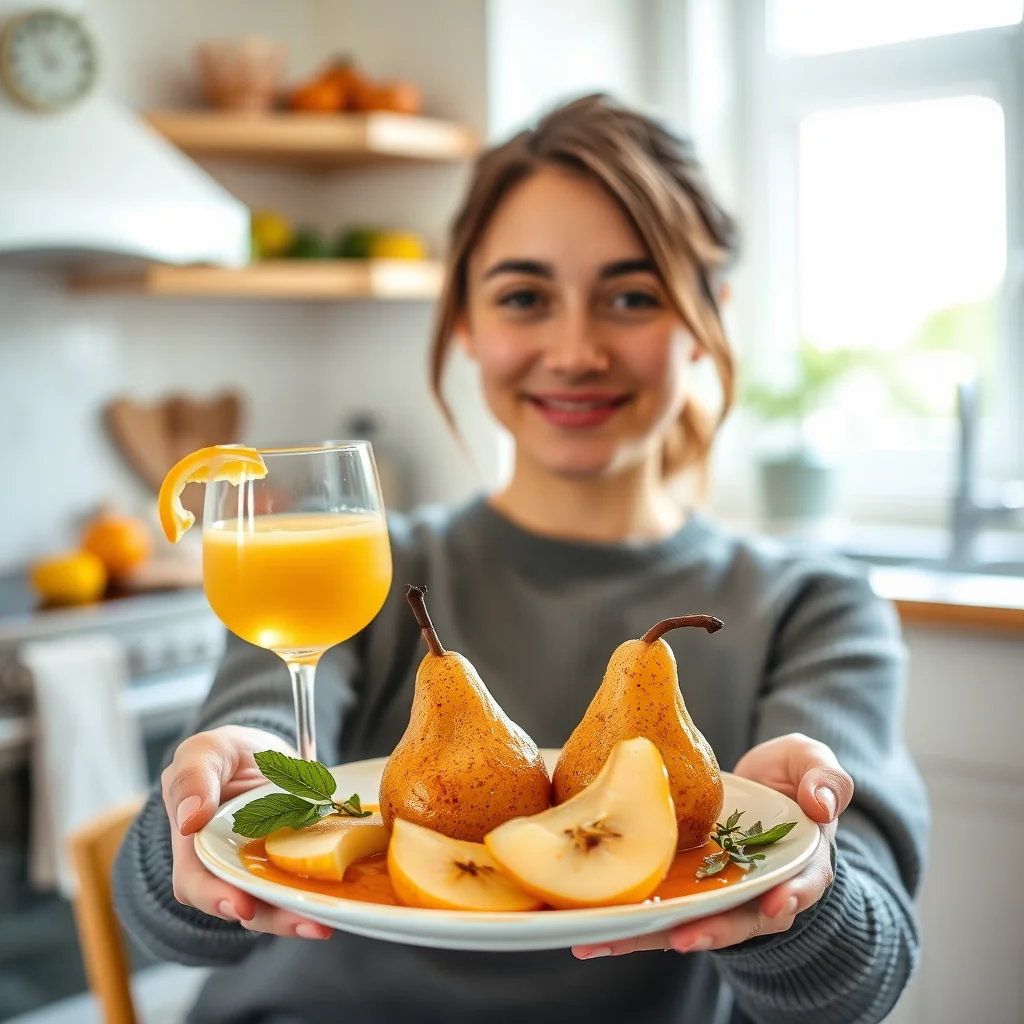
It’s amazing to really utilize fruits with their natural sugars for sweetening things. This recipe is a classic example of just how sweet oranges and pears are on their own—and how much sweeter they get when cooked together. You seriously won’t believe that there is no added sugar, honey, etc. in this recipe.
To really let the flavors sink in, let the pears sit in the liquid overnight, and serve either reheated or cold.
3 cups (750 mL) fresh-squeezed orange juice (no added sugar)
3 cups (750 mL) water
1 2-inch (4 cm) piece ginger, peeled
4 ripe (but not mushy) Bosc or Anjou pears, peeled and cored
5 whole cloves
1 stick cinnamon
~ zest of 1 orange
- Place all ingredients in a small saucepan, ensuring that all the pears are completely covered with liquid.
- Cut a circular piece of parchment paper that fits inside the 8- or 9-inch (20- or 23-cm) spring-form pan to keep pears from being exposed to air (if the pears are not covered with something—liquid or parchment—they will brown).
- Bring heat to a simmer, and let poach in liquid for about 30 minutes or until soft—not mushy.
- Remove pears from liquid, and bring remaining liquid to a boil.
- Reduce heat to a simmer, and allow to reduce by ½ to ¾, or until liquid is nice and syrupy.
- Remove cinnamon stick and pour syrup over pears and garnish with a sprinkle of cinnamon and/or some orange zest to serve.
Tips & Tricks—A melon baller works very well at removing the seeds and core from the pears. To do so, just insert the melon baller from the bottom of the pear and work your way up to remove all the seeds.
More Recipes You'll Love
Poached pears are the elegant dessert that asks almost nothing of you. Firm Bosc or Anjou pears simmer gently in fresh orange juice with ginger, cloves, and cinnamon until silky, then the poaching liquid reduces into a glossy syrup to pour over the top.
Pro Tips
- Choose pears that are ripe but not mushy — Bosc and Anjou hold their shape through the 30-minute poach where softer varieties collapse.
- Keep the pears submerged the whole time, using a circle of parchment paper pressed onto the surface of the liquid, or they'll brown and cook unevenly.
- Poach at a bare simmer, never a boil; a rolling bubble breaks the delicate flesh and you lose that clean pear shape on the plate.
- The pears are done when a knife slides in with gentle resistance — soft but not mushy is the line to hold.
- Reduce the remaining liquid by half to three-quarters until syrupy; it's the best part, so pour it generously and finish with a little cinnamon or orange zest.
Frequently Asked Questions
How far ahead can I make poached pears?
Poach them a day ahead and keep them submerged in their syrup in the fridge. Rewarm gently in the syrup before serving and reduce it further if it has thinned.
Which pears are best for poaching?
Bosc and Anjou are ideal — they stay firm and hold their elegant shape. Avoid Bartlett or very ripe pears, which go grainy and soft in the liquid.
Is this dessert paleo?
Yes: pears poached in fresh orange juice with ginger, cloves, and cinnamon, sweetened by fruit alone. No refined sugar anywhere in the pot.
Can I add other spices?
Star anise or a vanilla bean pod poach beautifully alongside the cloves and cinnamon. Just keep the aromatics light so they perfume rather than overpower the pear.
Recipe Card
Ingredients
Method
- Place all ingredients in a small saucepan, ensuring that all the pears are completely covered with liquid.
- Cut a circular piece of parchment paper that fits inside the 8- or 9-inch (20- or 23-cm) spring-form pan to keep pears from being exposed to air (if the pears are not covered with something—liquid or parchment—they will brown).
- Bring heat to a simmer, and let poach in liquid for about 30 minutes or until soft—not mushy.
- Remove pears from liquid, and bring remaining liquid to a boil.
- Reduce heat to a simmer, and allow to reduce by ½ to ¾, or until liquid is nice and syrupy.
- Remove cinnamon stick and pour syrup over pears and garnish with a sprinkle of cinnamon and/or some orange zest to serve.