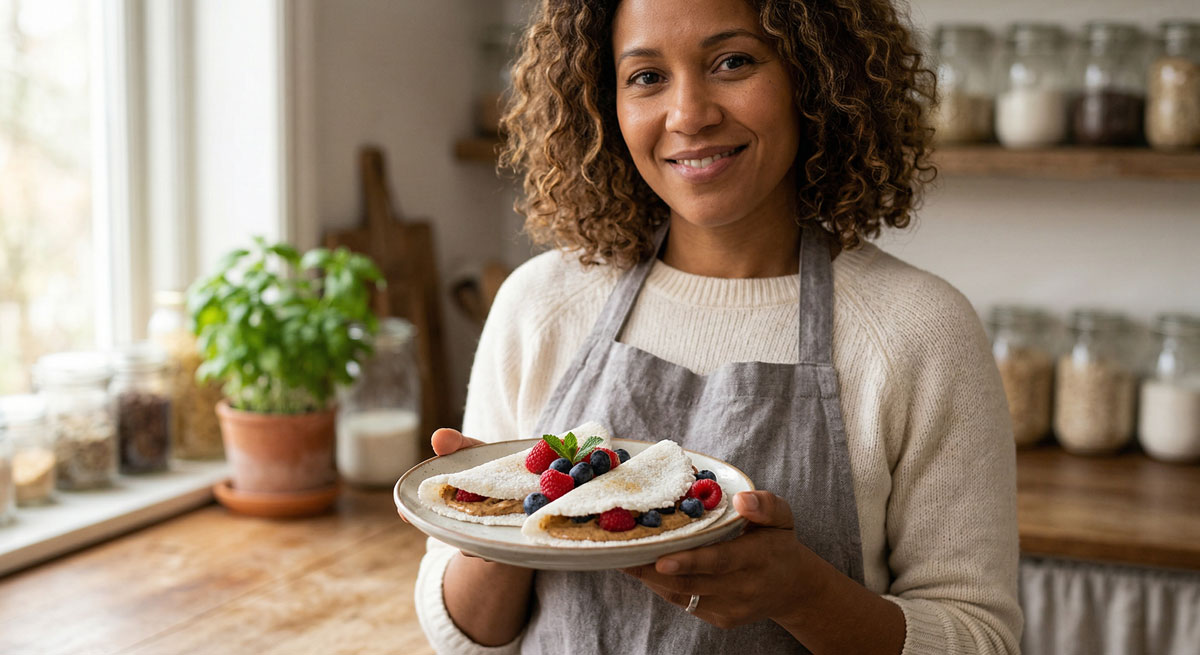
Essential Ingredients for the Perfect Tapioca Crêpes Recipe
Precision is key in baking and pastry. For the most consistent results with this Tapioca Crêpes Recipe, I highly recommend using a kitchen scale to measure your ingredients alongside the standard volume measurements provided below.
- 1 large free-range egg (approx. 1.8 oz / 50g)
- 1 cup full-fat coconut milk (8 fl oz / 240g)
- 1 cup tapioca flour (4.2 oz / 120g)
- 0.25 tsp. sea salt (0.05 oz / 1.5g)
- Toppings of choice: Almond butter and fresh berries, cinnamon and applesauce, or savory sautéed veggies.
Step-by-Step Tapioca Crêpes Recipe Instructions
- In a medium mixing bowl, vigorously whisk together the 1 large egg (1.8 oz / 50g), 1 cup full-fat coconut milk (8 fl oz / 240g), 1 cup tapioca flour (4.2 oz / 120g), and 0.25 tsp. sea salt (0.05 oz / 1.5g) until the batter is completely smooth, thin, and free of any lumps.
- Set a 10-inch non-stick skillet over medium heat and allow it to warm up thoroughly.
- Pour exactly 0.33 cups (approx. 2.6 oz / 75g) of the batter into the center of the hot skillet, immediately lifting and tilting the pan in a circular motion to spread the mixture into a thin, even layer across the bottom.
- Cook the crepe undisturbed on the first side for about 4 minutes, or until the edges begin to crisp and lift away from the pan, and the bottom is lightly browned.
- Slide a thin spatula under the center, carefully flip the crepe, and cook the second side for an additional 1 to 2 minutes until fully set and opaque.
- Transfer the cooked crepe to a warm serving plate and repeat the cooking process with the remaining batter.
- Serve the crepes warm, folded or rolled, and generously filled with your desired sweet or savory toppings.
Nutritional Information
Note: The following nutritional values are approximate per serving (excluding optional toppings) and can vary based on the specific brands of ingredients used.
- Calories: 580 kcal
- Carbohydrates: 71.5g
- Protein: 5.5g
- Fat: 31g
Chef's Pro Tips for the Best Tapioca Crêpes
To ensure your Tapioca Crêpes Recipe turns out flawlessly every single time, keep these professional kitchen tips in mind:
- Whisk Right Before Pouring: Tapioca flour is notoriously heavy and will quickly settle at the bottom of your mixing bowl. Always give your batter a vigorous whisk right before pouring it into the skillet to ensure an even consistency.
- Master the Swirl: Because this batter is thin and cooks rapidly, you need to move fast. Lift the skillet off the heat the second the batter hits the pan and immediately tilt it in a circular motion. This guarantees a delicate, thin crepe rather than a thick, gummy pancake.
- Nail the Pan Temperature: Medium heat is your sweet spot. If the pan is smoking hot, the batter will instantly set before you can swirl it. If it’s too cool, the crepes will stick and tear. Test the heat with a tiny drop of batter—it should sizzle gently.
- Adjust the Richness: Full-fat coconut milk gives these crepes a rich, pliable texture and a gorgeous mouthfeel. However, if you want a lighter crepe with fewer calories and fat, you can seamlessly substitute it with "lite" canned coconut milk or even almond milk, though the edges may become slightly crispier.
Frequently Asked Questions (FAQ)
Can I make this easy tapioca crêpes recipe ahead of time? Yes! You can prepare the batter up to 24 hours in advance and store it in an airtight container in the refrigerator. Because tapioca starch separates and solidifies at the bottom when resting, you must whisk the batter vigorously for a minute or two until it is completely smooth again before cooking.
Why are my coconut milk tapioca crepes turning out gummy? Gummy crepes are usually the result of two things: undercooking or pouring the batter too thickly. Ensure your skillet is fully preheated to medium heat, and make sure you are spreading the 0.33 cups of batter as thinly as possible. Cook until the crepe is entirely opaque and lightly browned before flipping.
Is this tapioca crêpes recipe vegan? While this recipe is entirely gluten-free, dairy-free, and paleo-friendly, it is not vegan because it utilizes a free-range egg as a binder. For a vegan alternative, you can try substituting the egg with a "flax egg" (1 tbsp. ground flaxseed mixed with 3 tbsp. water, rested for 10 minutes), though the final texture will be slightly less elastic.
What is the best type of pan to use for gluten-free crepes? For the most frustration-free experience, a high-quality, heavy-bottomed 10-inch non-stick skillet is highly recommended. If you are an experienced cook, a well-seasoned carbon steel crepe pan works beautifully and will give you those perfectly crisp, lacy edges.