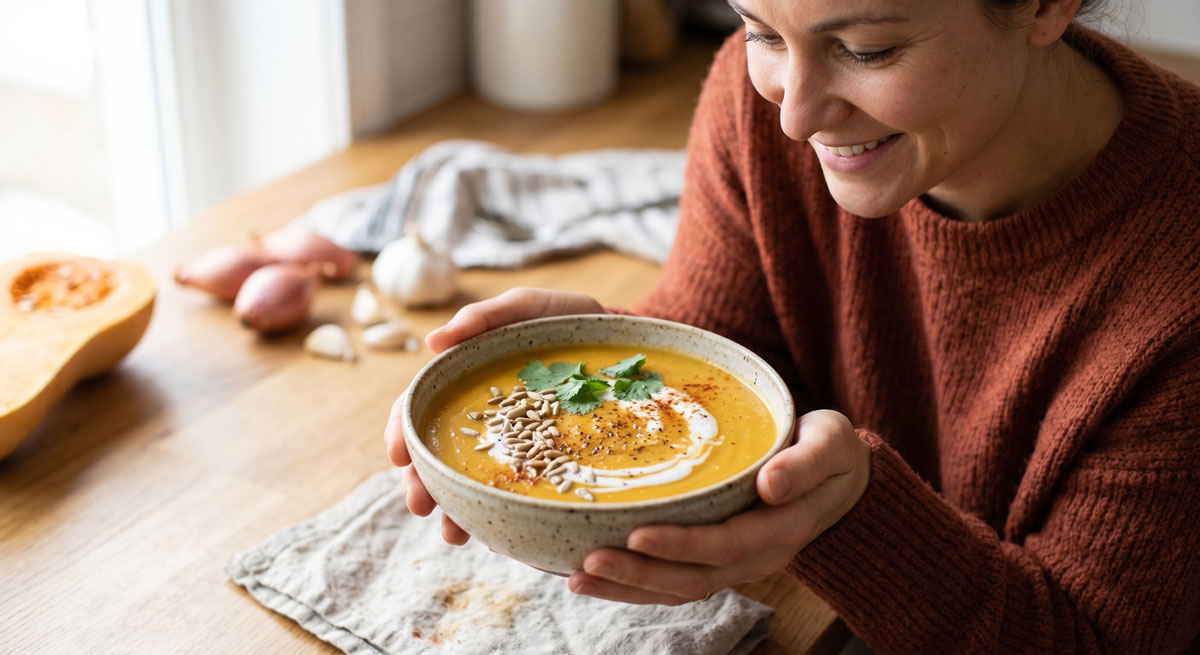
Yields: 6 Servings Total Time: 55 Minutes Prep Time: 15 Minutes Cook Time: 40 Minutes
Ingredients
- 1 can (14 oz / 400g) light coconut milk
- 3 lbs (48 oz / 1360g) butternut squash, peeled, seeded, and sliced into small chunks
- 1 cup (8 oz / 240g) low-sodium vegetable broth
- 1 cup (8 oz / 240g) low-sodium chicken broth
- 3 cloves (0.1 oz / 3g) garlic, minced
- 2 tsp. (0.3 oz / 10g) extra virgin olive oil, divided
- 1 cup (5.3 oz / 150g) sliced shallots
- 0.5 tsp. (0.1 oz / 3g) sea salt
- 1 whole bay leaf (0.1 oz / 1g)
Optional Garnishes:
- 1 tbsp. (0.5 oz / 14g) sunflower seeds
- 0.1 tsp. (0.1 oz / 1g) fresh ground black pepper
- 0.1 tsp. (0.1 oz / 1g) paprika
- 1 tbsp. (0.1 oz / 3g) fresh cilantro, chopped
How to Make Roasted Butternut Squash Soup
- Preheat your oven to 450°F (230°C).
- On a rimmed baking sheet, toss together the 1 cup (5.3 oz / 150g) sliced shallots, 3 lbs (48 oz / 1360g) butternut squash chunks, 1 tsp. (0.15 oz / 5g) of the extra virgin olive oil, and the 0.5 tsp. (0.1 oz / 3g) sea salt. Roast in the preheated oven for 30 minutes, or until the vegetables are tender and slightly browned.
- Transfer the roasted vegetables to a large saucepan and add the remaining 1 tsp. (0.15 oz / 5g) of extra virgin olive oil. Cook over medium-low heat, stirring regularly, for 5 minutes.
- Stir in the 3 minced garlic cloves (0.1 oz / 3g) and cook for an additional 30 seconds until fragrant.
- Pour in the 1 can (14 oz / 400g) coconut milk, 1 cup (8 oz / 240g) vegetable broth, 1 cup (8 oz / 240g) chicken broth, and add the 1 bay leaf (0.1 oz / 1g). Cook for 2 minutes, then lower the heat and let it simmer for 5 additional minutes.
- Carefully remove and discard the bay leaf. Transfer the warm soup mixture to a high-speed blender and blend until it reaches a very smooth, creamy consistency. Portion into bowls, top with your favorite optional garnishes, and enjoy.
Nutritional Information (Per Recipe)
- Calories: 1450 kcal
- Carbohydrates: 195 g
- Protein: 26 g
- Fat: 60 g
Pro Tips
- Don't Rush the Roast: Allowing the butternut squash and shallots to deeply brown in the oven is the secret to a rich, complex flavor. The caramelization brings out the natural sweetness of the squash.
- Blend Carefully: If using a standard countertop blender rather than an immersion blender, be sure to blend the hot soup in batches. Remove the center cap from the blender lid and cover it lightly with a kitchen towel to let steam escape, preventing the pressure from blowing the lid off.
- Adjust the Consistency: Butternut squash can vary in moisture content. If your soup turns out too thick after blending, simply whisk in a little extra hot chicken or vegetable broth, a tablespoon at a time, until you reach your desired consistency.
- Spice it Up: While this recipe relies on simple, wholesome ingredients, a tiny pinch of fresh ground nutmeg, ginger, or even a dash of cayenne pepper can beautifully elevate the flavor profile.
Frequently Asked Questions (FAQ)
Can I freeze this Roasted Butternut Squash Soup? Yes, this Roasted Butternut Squash Soup freezes exceptionally well. Let the soup cool completely to room temperature, then transfer it to airtight, freezer-safe containers or heavy-duty freezer bags. It will stay fresh in the freezer for up to 3 months. Thaw overnight in the refrigerator before reheating gently on the stove.
How long does leftover Roasted Butternut Squash Soup last in the fridge? When stored in an airtight container, your homemade Roasted Butternut Squash Soup will last for 4 to 5 days in the refrigerator. In fact, the flavors often meld and taste even better the next day!
Can I make this Roasted Butternut Squash Soup fully vegan? Absolutely. The recipe already uses light coconut milk instead of heavy cream, making it naturally dairy-free. To make it entirely vegan, simply swap out the 1 cup of low-sodium chicken broth for an additional cup of low-sodium vegetable broth.
Do I have to peel the butternut squash before roasting? For this blended soup recipe, it is highly recommended to peel the squash first. While butternut squash skin is technically edible, peeling it ensures the final texture of your soup is incredibly silky and smooth without any tough fibrous bits.