If you’re anything like me, a meal just isn’t complete without a little kick of heat. But finding a store-bought bottle that strictly fits a clean lifestyle can be tricky. That’s exactly why I fell in love with making this Paleo Louisiana-Style Fermented Hot Pepper Sauce. It’s not just about the spice; it’s about developing that deep, complex tang you only get from naturally fermented chilies. This recipe is incredibly simple, packed with gut-healthy probiotics, and brings that authentic Louisiana-style flavor right to your kitchen counter without any hidden sugars or additives. Trust me, once you taste the difference of homemade, you’ll never go back to the commercial stuff!
Ingredients
-
12.0 ounces (340.2 grams) Fresh Red Chili Peppers (such as Cayenne). This is approximately 1 pint loosely packed. Tops snipped and sliced (wear gloves).
-
0.24 ounces (6.8 grams) Sea Salt. This is approximately 1.25 tsp. Note: This amount is calculated at 2% of the pepper weight. If you use a different weight of peppers, multiply that weight by 0.02 to get the correct salt amount.
-
1.5 to 2.0 cups (355 to 475 ml) Sweet White Wine (Riesling or similar). You need enough to completely cover the peppers with 0.5 inches of liquid above the surface.
-
0.5 to 1.0 cups (120 to 240 ml) Apple Cider Vinegar (or other naturally fermented vinegar). The exact amount will depend on how much brine you produce.
-
0.1 ounces (3.0 grams) Sea Salt (optional), to taste, for finishing.
Preparation Instructions
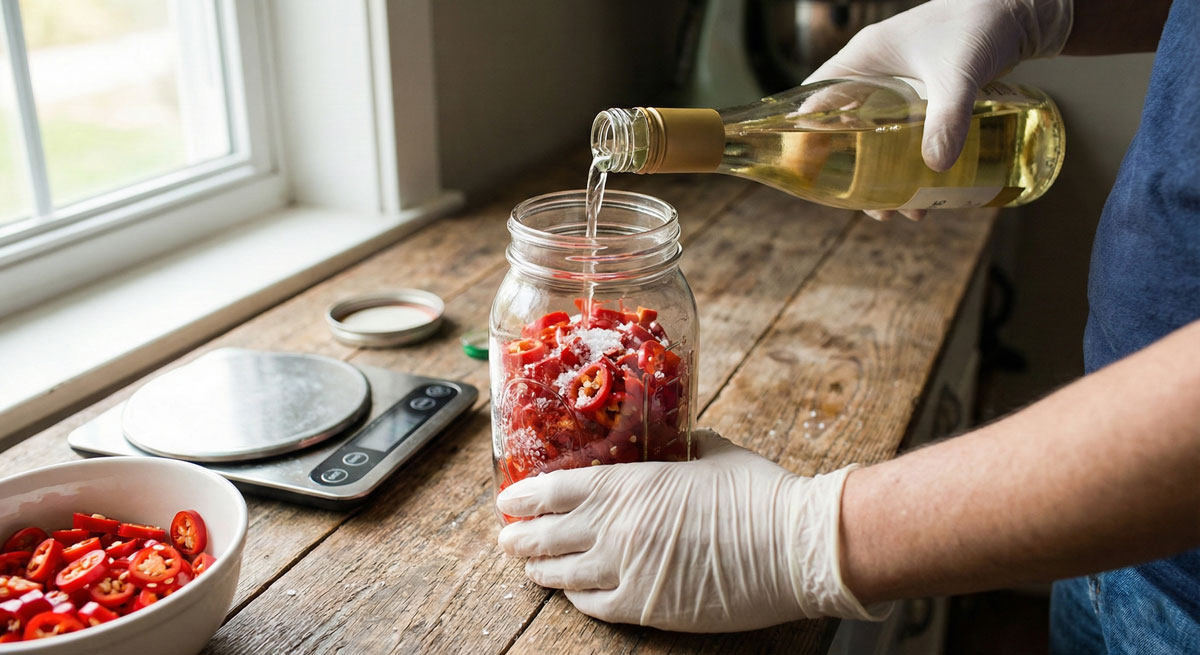
1. Pack the Jar Put on protective gloves. Place the 12.0 ounces (340.2 grams) of sliced chilies and 0.24 ounces (6.8 grams) of sea salt into a clean glass canning jar. Ensure you leave approximately 1.5 inches of empty headspace between the top of the jar and the surface of the peppers.
2. Add the Liquid Pour the Sweet White Wine over the chilies. Ensure the peppers are completely submerged with about 1.0 inch of headspace remaining between the liquid surface and the jar rim. Using a small spoon, mash the peppers thoroughly to release air bubbles and mix the salt. Tip: If the jar opening is too small, mash the peppers and salt in a bowl first, then transfer to the jar and cover with wine.
3. Cover and Store Cover the jar tightly with cheesecloth and secure it with a rubber band (or use a canning jar ring to hold the cloth in place). This protects the mix from insects while allowing it to breathe. Place the jar in a cool area with a temperature between 65°F and 85°F (18°C and 29°C).
4. Ferment Check the jar every morning. If any white mold appears on the surface, carefully remove it with a spoon. Stir the peppers daily with a clean spoon and re-cover. The sauce will bubble during fermentation. Continue this process for 2 to 6 weeks until the bubbling stops and the flavor reaches your desired depth.
5. Mill the Sauce Once fermented, set a food mill over a large bowl. Pour the pepper mash and brine into the mill. Rotate the handle in both directions to extract as much liquid and pulp as possible. Discard the dry skin and seeds remaining in the mill.
6. Finish and Bottle Measure the volume of the liquid brine you collected in the bowl. Add exactly half that amount of Apple Cider Vinegar. (For example: if you have 1.0 cup of brine, add 0.5 cups of vinegar). Taste the sauce and add the optional extra sea salt if you desire more complexity. Stir well, transfer to a sealed bottle or jar, and store in the refrigerator for up to one year.
Nutritional Information
Yields: Approximately 1 pint (16.0 fl oz / 473 ml) Serving Size: 1 Teaspoon (5ml) Servings Per Container: Approx. 96
-
Calories: 6 kcal
-
Total Fat: 0 g
-
Cholesterol: 0 mg
-
Sodium: 30 mg
-
Total Carbohydrates: 0.5 g
-
Dietary Fiber: 0.1 g
-
Sugars: 0.3 g
-
-
Protein: 0.1 g
Keto & Paleo Diet Note: While the raw ingredients (specifically the sweet Riesling) contribute carbohydrates, the bacteria involved in the fermentation process “eat” these sugars to survive. For a strict Keto calculation, the Net Carbs per serving are likely close to 0g to 0.1g by the time the sauce stops bubbling.
Pro Tips for Fermentation Success
-
Don’t Skip the Gloves: I cannot stress this enough—capsaicin (the oil that makes peppers hot) sticks to skin. If you slice 12 ounces of chilies with bare hands, your fingers might burn for hours, and rubbing your eyes is a disaster waiting to happen. Use latex or nitrile gloves!
-
Kahm Yeast vs. Mold: If you see a thin, white, powdery film on top of your liquid, don’t panic! This is usually just “Kahm yeast,” which is harmless. You can skim it off. However, if you see fuzz (blue, green, or black), that is mold. If mold appears, you unfortunately need to discard the batch and start over. Keeping everything submerged is your best defense against mold.
-
The “Weight” Trick: The recipe mentions mashing the peppers to keep them submerged, but stubborn pieces often float to the top where they can mold. A simple trick is to fill a small ziplock bag with water (or brine) and place it inside the jar on top of the peppers. This acts as a weight to keep everything safely under the brine level.
-
Temperature Matters: Fermentation happens faster in warmer kitchens and slower in cooler ones. If your kitchen is very cold (below 65°F), the sauce might take the full 6 weeks (or longer) to develop. If it’s hot (above 85°F), it might ferment too quickly and taste “yeasty.” Find a happy medium, like a pantry shelf or a cupboard.
-
Experiment with Vinegar: The recipe suggests Apple Cider Vinegar (ACV) because it contains “the mother” and keeps the sauce probiotic. However, you can change the flavor profile by using white wine vinegar for a crisper taste or champagne vinegar for something lighter. Just avoid distilled white vinegar if you want to keep that raw, Paleo vibe.
-
Let it Mellow: Right after blending, the sauce might taste very sharp. This is normal! Once you bottle it and put it in the fridge, the flavors will “marry” and mellow out over the next week or two. The sauce often tastes better on day 14 than on day 1.
Frequently Asked Questions
1. Is fermented hot sauce alcoholic? Because this recipe uses sweet white wine as a starter, there is a small amount of alcohol initially. However, during the fermentation process, bacteria consume the sugars and convert much of the alcohol into acetic acid (vinegar). While trace amounts may remain, it is generally not considered an alcoholic beverage in the culinary sense.
2. How long does homemade fermented hot sauce last? Thanks to the acidity from the fermentation and the added vinegar, this sauce is shelf-stable but best kept in the refrigerator to preserve the probiotic benefits and fresh flavor. It will easily last for up to one year in the fridge.
3. Which peppers are best for Louisiana-style sauce? The classic Louisiana hot sauce (like Tabasco or Frank’s) typically uses Cayenne peppers or Tabasco peppers. However, this recipe is versatile. You can use Fresnos for a milder sauce, or Red Jalapeños. As long as they are red and ripe, they will work beautifully.
4. Is this hot sauce strictly Paleo and Keto friendly? Yes! Commercial hot sauces often contain added sugar, cornstarch, or preservatives. This recipe relies entirely on natural fermentation for flavor and preservation, making it perfectly suitable for Paleo, Keto, and Whole30 diets.
5. Can I use frozen peppers for fermentation? Fresh peppers are always best because they naturally carry the lactobacillus bacteria needed for fermentation on their skin. Freezing can kill some of these beneficial bacteria. If you must use frozen peppers, you might need to add a “starter” (like a splash of juice from a jar of raw sauerkraut) to kickstart the process.
6. Do I have to use white wine? The wine adds a specific flavor profile and sugar source for the bacteria in this specific Louisiana-style recipe. If you prefer to avoid wine entirely, you can substitute it with a simple brine made of water and sugar (the sugar will be eaten by the bacteria), but the flavor profile will differ from the wine-based version.
Conclusion
Making your own hot sauce might sound like a science project, but as you can see, it’s really just a waiting game. The hardest part is simply having the patience to let those peppers bubble away on your counter! I promise that once you drizzle this tangy, probiotic-rich gold over your morning eggs or tacos, you’ll realize it was worth every second of the wait. So, grab your gloves and get that jar started today—your future self will thank you. If you give this recipe a try, I’d love to hear about it; drop a comment below or tag me on social media so I can see your spicy creations!