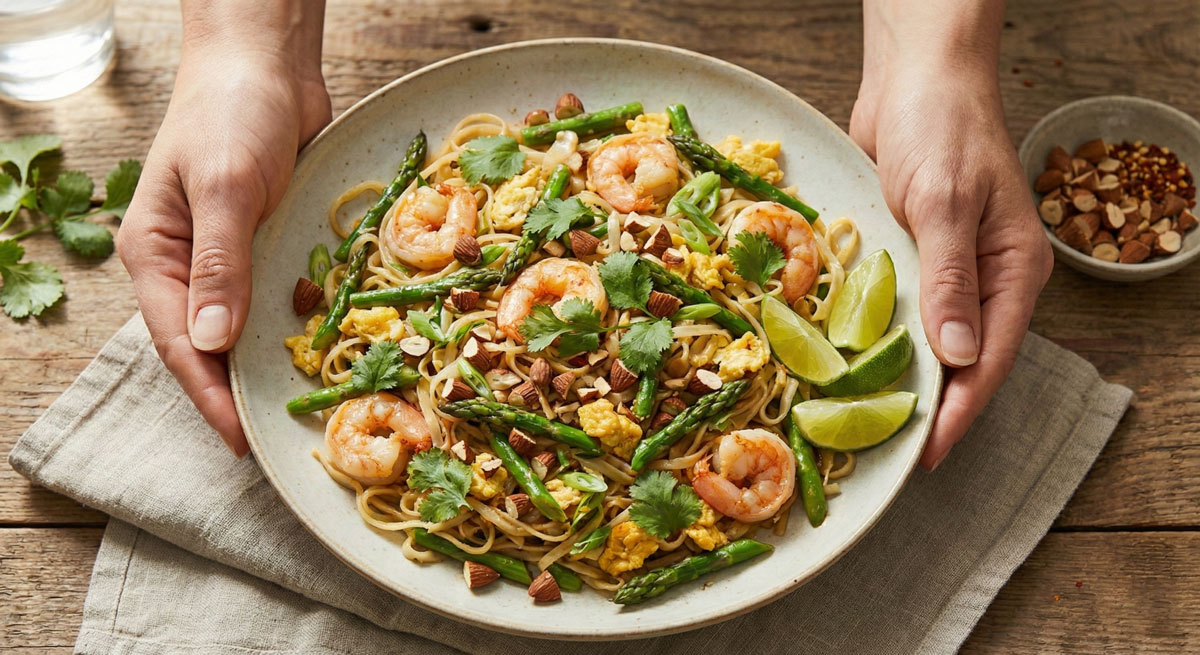
If you’re anything like me, you crave those bold, tangy flavors of takeout but could do without the heavy carb coma that follows. That’s exactly why I’m obsessed with this low-carb Shrimp Pad Thai recipe. By swapping out traditional rice noodles for fresh cabbage noodles, we keep things light, crunchy, and totally guilt-free. It’s packed with protein and veggies, making it my go-to for a healthy weeknight dinner that actually tastes like an indulgence. Trust me, once you try this fresh twist, you won’t even miss the starch!
Serves: 4 Prep time: 20 minutes Cook time: 10 minutes
Ingredients
-
12 oz (340 g) medium wild-caught shrimp, peeled, deveined, and tails removed
-
8 oz (227 g) cabbage, sliced into 0.25-inch wide strips
-
6 oz (170 g) asparagus, tough ends removed and cut on the bias
-
2.5 tbsp coconut oil, divided
-
3 tbsp fish sauce
-
3 tbsp palm sugar
-
2 tbsp tamarind paste
-
1 tbsp white balsamic vinegar
-
4 tbsp minced fresh cilantro
-
2 tbsp roasted, unsalted almonds, chopped
-
0.25 tsp cayenne pepper
-
1 shallot, minced
-
3 garlic cloves, minced
-
2 large eggs, lightly beaten
-
4 scallions, sliced thin on the bias
-
Sea salt (to taste)
-
Lime wedges (for serving)
-
Boiling water (enough to cover cabbage and tamarind)
Preparation
- Prepare the Cabbage Place the 8 oz (227 g) of cabbage strips in a large pot. Cover completely with boiling water and place a lid on the pot. Allow the cabbage to soak until it is softened, pliable, and crisp-tender, approximately 1 minute. Drain well and set aside.
- Make the Sauce In a small bowl, soak the 2 tbsp of tamarind paste in boiling water until softened, approximately 10 minutes. Push the mixture through a fine-mesh strainer into a medium bowl to remove seeds and fibers, extracting as much pulp as possible. To the tamarind pulp, add the 3 tbsp fish sauce, 3 tbsp palm sugar, 1 tbsp of the coconut oil, 1 tbsp white balsamic vinegar, and 0.25 tsp cayenne pepper. Whisk until well combined.
- Cook the Shrimp Mix Heat 0.5 tbsp of coconut oil in a 12-inch nonstick skillet over high heat until shimmering. Add the 6 oz (170 g) of asparagus, the prepared shrimp, the sauce mixture, and the scallions. Cook for 2 to 3 minutes until the shrimp are cooked through. Remove the contents from the skillet and set aside.
- Stir-fry Asparagus Add 0.5 tbsp of coconut oil to the now-empty skillet over medium-high heat. Add the asparagus (if separated) or any remaining vegetable pieces and stir-fry until crisp and tender. Remove from the skillet and set aside with the shrimp mixture.
- Scramble and Combine Add the remaining 0.5 tbsp of coconut oil to the skillet and return to medium heat until shimmering. Add the minced shallot and garlic; cook until lightly browned, approximately 1.5 minutes. Stir in the 2 beaten eggs and cook, stirring constantly, until scrambled but still moist, about 20 seconds. Stir in the prepared cabbage and any remaining sauce mixture. Increase heat to high and cook, tossing gently, until the cabbage is evenly coated, approximately 1 minute.
- Final Assembly Stir in the cooked shrimp, asparagus, and scallion mixture. Cook until the shrimp are heated through and the cabbage is tender, approximately 2 minutes. Season with sea salt to taste.
To Serve Divide onto plates and sprinkle with the 4 tbsp of cilantro and 2 tbsp of chopped almonds. Serve immediately with lime wedges on the side.
Here is the estimated nutritional information per serving for the Shrimp and Asparagus Pad Thai recipe.
Serving Size: 1 serving (based on 4 total servings)
Per Serving Estimates
-
Calories: 310 kcal
-
Total Fat: 14.5 g
-
Saturated Fat: 8 g (primarily from coconut oil)
-
Cholesterol: 195 mg
-
Sodium: 1,150 mg (varies significantly based on fish sauce brand and added salt)
-
Total Carbohydrates: 21 g
-
Dietary Fiber: 3 g
-
Sugars: 14 g (primarily from palm sugar)
-
Protein: 24 g
-
Potassium: 420 mg
Nutritional Notes This version of Pad Thai is significantly lower in carbohydrates than traditional recipes because it replaces rice noodles with cabbage strips. However, the palm sugar contributes the majority of the carbohydrate count; for a stricter low-carb or keto-friendly version, you could substitute the palm sugar with a monk fruit or erythritol sweetener.
Chef’s Pro Tips for the Perfect Bowl
-
Prep Before You Pour: Stir-frying happens fast—like, really fast. Because this recipe moves quickly once the heat is on, measure out all your ingredients and have them chopped, mixed, and sitting next to the stove before you even turn on the burner. This technique (called mise en place) is the secret to stress-free cooking.
-
The “Dry” Cabbage Trick: After you drain the cabbage in step 1, give it a really good shake or even pat it down with paper towels. If the cabbage is too wet when it hits the skillet later, it will steam instead of fry, and you’ll lose that delicious texture we want.
-
Handling Palm Sugar: If your palm sugar comes in hard discs or blocks, it can be tough to measure. Use a sharp knife to shave it down or grate it first. This helps it dissolve much faster into your tamarind sauce mixture so you don’t end up with grainy sweet spots.
-
Don’t Overcook the Shrimp: Shrimp can go from tender to rubbery in a heartbeat. As soon as they turn opaque and pink in Step 3, get them out of the pan immediately. They will continue to cook slightly from residual heat while they sit.
-
Customize Your Tang: Tamarind paste can vary in acidity depending on the brand. Before you add the sauce to the pan, give it a tiny taste test. If it’s too sour, add a pinch more sugar; if it’s too sweet, a splash more fish sauce or lime juice will balance it out.
Frequently Asked Questions
Is this Shrimp Pad Thai recipe Keto-friendly? This recipe is naturally lower in carbohydrates because it uses cabbage noodles instead of rice noodles. However, the original recipe uses palm sugar. To make this strictly Keto-friendly, simply substitute the palm sugar with a low-glycemic sweetener like Monk Fruit or Erythritol.
What can I use as a substitute for tamarind paste? If you cannot find tamarind paste, you can create a similar flavor profile by mixing 1 tablespoon of lime juice with an equal amount of brown sugar (or sugar substitute) and a splash of Worcestershire sauce. While not identical, it provides the necessary sweet-and-sour tang.
Is this recipe gluten-free? Yes, this recipe is generally gluten-free as it avoids wheat noodles and soy sauce. However, you must check the labels on your Fish Sauce and White Balsamic Vinegar to ensure they are certified gluten-free, as hidden gluten can sometimes be present in processed condiments.
Can I use chicken or tofu instead of shrimp? Absolutely. This sauce works perfectly with other proteins. If using chicken, slice it into thin strips and stir-fry it fully before setting it aside (similar to step 3). For tofu, use extra-firm tofu, pressed and cubed, and pan-fry it until golden before adding it to the sauce.
How do I store and reheat leftovers? Because this recipe uses cabbage noodles, it is best enjoyed fresh. The cabbage may release water and become softer when stored. If you do have leftovers, store them in an airtight container in the refrigerator for up to 2 days. Reheat quickly in a hot skillet rather than the microwave to help maintain some texture.
There you have it—a restaurant-quality Pad Thai that fits perfectly into your healthy lifestyle without sacrificing an ounce of flavor. I really hope this Shrimp and Asparagus version finds a permanent spot in your weekly rotation; it’s proof that eating well doesn’t mean giving up your favorite takeaway tastes. Whether you’re cooking for a date night or just need a nutritious win after a long day, this dish delivers every time. If you give it a try, please leave a star rating below or snap a photo and tag me on social media—I’d love to see your creation! Happy cooking!