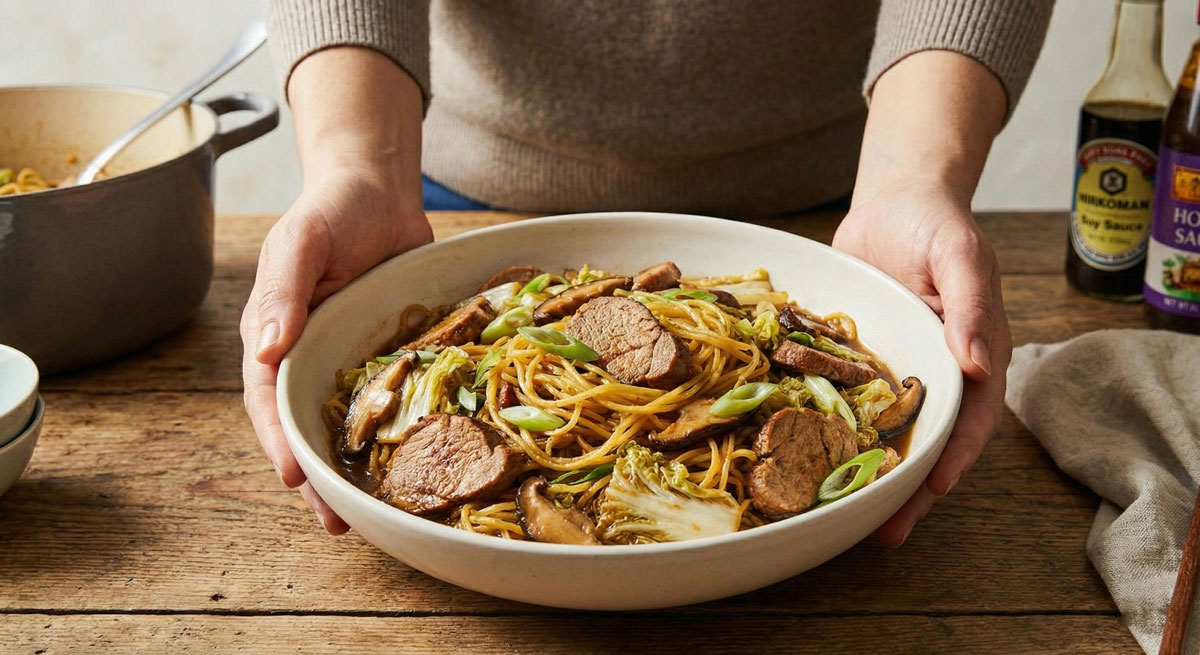
Craving the savory depth of your favorite takeout without the heavy carbs? This Healthy Pork Lo Mein is the perfect solution for a guilt-free weeknight dinner. By swapping traditional wheat noodles for tender spaghetti squash, we’ve created a Low Carb and Gluten-Free version of the classic dish that doesn’t sacrifice flavor. Packed with lean pork tenderloin, umami-rich shiitake mushrooms, and fresh veggies, this Spaghetti Squash Lo Mein delivers all the authentic taste of Chinese takeout in a nutrient-dense, clean-eating bowl.
Serves: 6
Ingredients
-
0.5 tbsp Soy Sauce
-
3 tbsp Hoisin Sauce
-
2 tbsp Olive Oil
-
0.25 tsp Five-Spice Powder
-
24 oz (680 g) Pork Tenderloin, trimmed of visible fat, halved lengthwise, and sliced crosswise into 0.125-inch thick pieces
-
0.75 cup Chicken Broth or Stock
-
1.5 tsp Tapioca or Arrowroot Flour
-
12 oz (340 g) Spaghetti Squash
-
4.5 tsp Coconut Oil (divided use)
-
6 tbsp Dry Sherry
-
12 oz (340 g) Shiitake Mushrooms, stemmed (halved if small, quartered if large)
-
16 oz (454 g) Napa Cabbage, cored and sliced crosswise into 0.5-inch thick pieces (approx. 6 cups)
-
8 Scallions, white parts sliced thin, green parts cut into 1-inch pieces
-
1 tbsp grated fresh Ginger Root
-
3 Garlic Cloves, minced
-
1 tsp Louisiana-Style Fermented Hot Sauce
Preparation
- Combine the Soy Sauce, Hoisin Sauce, olive oil, and five-spice powder in a bowl. Measure out 0.25 cup of this sauce mixture into a separate bowl and stir in the pork. Cover and refrigerate for 30 to 60 minutes. Whisk the chicken broth and tapioca (or arrowroot) flour into the remaining sauce mixture and set aside.
- Heat 1.5 tsp of the coconut oil in a Dutch oven over high heat until just shimmering. Add half of the pork, breaking up any clumps, and cook until lightly browned but not fully cooked (about 3 minutes). Stir in 3 tbsp of sherry and cook until the liquid is nearly evaporated (about 1 minute). Transfer the pork to a clean bowl. Repeat this process with another 1.5 tsp of coconut oil, the remaining pork, and the remaining 3 tbsp of sherry.
- Wipe the now-empty pot clean. Add the remaining 1.5 tsp of coconut oil and place over high heat until shimmering. Add the mushrooms and cook until lightly browned (4 to 6 minutes). Stir in the cabbage and cook until wilted (about 2 minutes). Stir in the scallions, ginger, and garlic and cook until fragrant (about 30 seconds).
- Whisk the reserved sauce mixture to recombine and add it to the pot. Stir in the cooked pork and any accumulated juices. Simmer until the sauce has thickened slightly and the pork is heated through (about 1 minute). Stir in the prepared spaghetti squash and the hot sauce. Serve immediately.
Nutrition per Serving
-
Calories: 320 kcal
-
Total Fat: 14g
-
Saturated Fat: 5g
-
Cholesterol: 75mg
-
Sodium: 680mg
-
Total Carbohydrates: 20g
-
Dietary Fiber: 3g
-
Sugars: 6g
-
Protein: 26g
Note: Nutritional values are estimates based on standard databases and may vary depending on the specific brands of Hoisin sauce, broth, and pork used.
Pro Tips for the Perfect Pork Lo Mein
-
Banishing the “Mush”: The secret to convincing “noodles” is moisture control. After roasting and scraping out your spaghetti squash strands, place them in a clean kitchen towel or cheesecloth and squeeze out as much excess liquid as possible before adding them to the wok. This prevents the sauce from becoming watery and keeps the “noodles” slightly al dente.
-
Easy Slicing: Pork tenderloin can be slippery to cut. Pop the tenderloin in the freezer for about 15 to 20 minutes before slicing. This firms up the meat, allowing you to cut those paper-thin, professional-looking 0.125-inch slices with ease.
-
Don’t Crowd the Pan: The recipe calls for cooking the pork in two batches for a reason! If you crowd the Dutch oven, the temperature drops and the meat releases water, causing it to steam instead of sear. You want that golden-brown crust for maximum flavor.
-
Mise en Place is Key: Stir-frying happens fast—often in seconds. Have all your vegetables chopped, sauces mixed, and spices measured before you turn on the stove. Once the heat is high, you won’t have time to chop garlic without burning the ginger!
-
Crispy Cabbage: Napa cabbage releases water quickly. When you add it in step 3, keep the heat high and toss it frequently. You want it wilted but still crunchy, providing a nice textural contrast to the tender pork and squash.
Frequently Asked Questions
Can I use regular noodles instead of spaghetti squash? Absolutely. While this recipe uses spaghetti squash to keep it low-carb and gluten-free, you can easily substitute 12 oz of dried egg noodles, rice noodles, or even standard spaghetti. Cook the noodles according to the package directions, drain them, and toss them in during the final step instead of the squash.
Is this Pork Lo Mein recipe Keto-friendly? Yes, this recipe is compatible with a Keto diet. By replacing traditional wheat noodles with spaghetti squash and using arrowroot flour (a lower-carb thickener) in moderation, the net carbs are significantly reduced compared to takeout Lo Mein. To lower the carbs even further, you can reduce the amount of Hoisin sauce or use a sugar-free alternative.
How do I store and reheat leftovers? Store leftovers in an airtight container in the refrigerator for up to 3 days. Because spaghetti squash can release moisture over time, the sauce may thin out slightly upon reheating. We recommend reheating in a skillet over medium heat rather than microwaving, as this helps evaporate excess liquid and keeps the texture firm.
Can I make this recipe vegetarian? Yes! To make a vegetarian Lo Mein, substitute the pork tenderloin with firm tofu (pressed and cubed) or extra mushrooms and bok choy. Use vegetable broth instead of chicken broth, and ensure your Hoisin sauce is vegetarian-certified.
What is a good substitute for dry sherry? If you don’t have dry sherry on hand, you can substitute it with Shaoxing wine (Chinese cooking wine) for an authentic flavor. For a non-alcoholic substitute, use a mixture of apple cider vinegar diluted with a little water or simply extra chicken broth with a splash of rice vinegar.