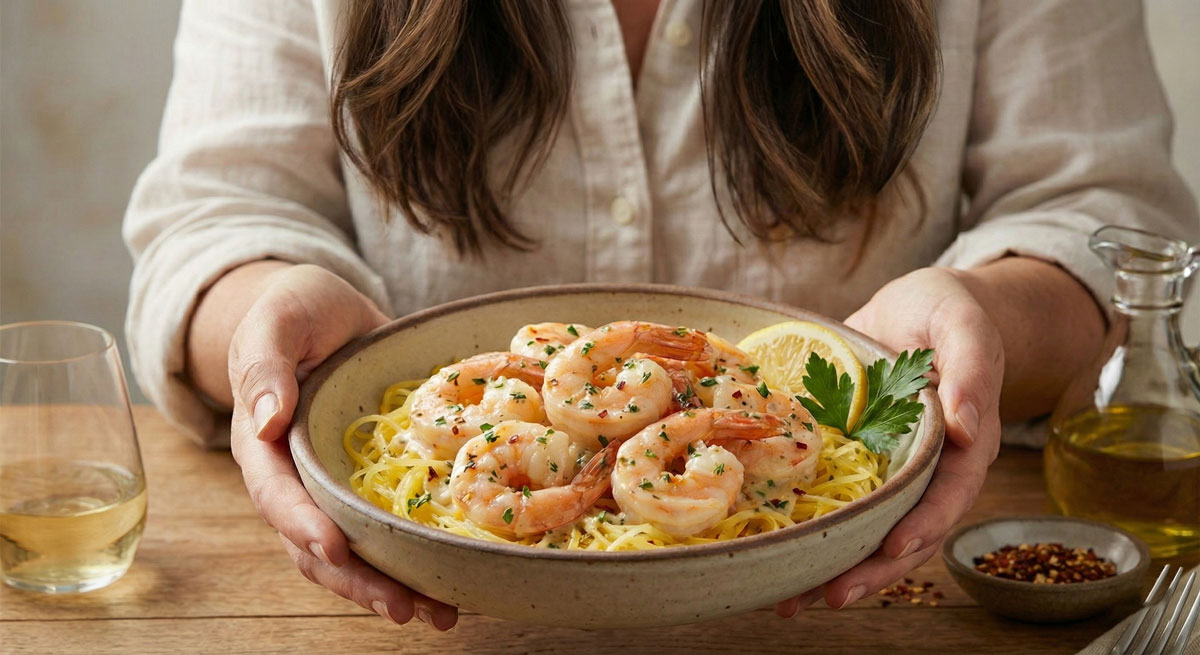
Looking for a healthy shrimp recipe that doesn’t sacrifice flavor? This Shrimp Scampi with Spaghetti Squash is the perfect solution for a satisfying, low-carb dinner. By swapping traditional pasta for tender spaghetti squash strands, you get all the comfort of the classic dish without the heavy grains. Smothered in a rich, creamy garlic sauce and brightened with fresh lemon juice, this gluten-free meal feels indulgent but is packed with wholesome ingredients. It’s an easy, nutrient-dense way to enjoy a restaurant-quality meal right at home.
Serves: 6
Ingredients
- Sea salt and pepper to taste
- 1 onion, chopped fine
- 1 tsp olive oil
- 8 garlic cloves, minced
- 2 tsp minced fresh thyme
- 0.125 tsp red pepper flakes
- 2 cups Chicken Broth or Stock
- 16 fl oz (454 g) clam juice (two 8 oz bottles)
- 1 bay leaf
- 2 tbsp tapioca or arrowroot flour
- 2 tbsp water
- 0.5 cup fresh lemon juice (3 lemons)
- 1.5 oz (43 g) Coconut Milk Cheddar Cheese, softened
- 1.5 lb (24 oz / 680 g) extra-large shrimp, wild-caught, peeled, deveined, and tails removed
- 1 lb (16 oz / 454 g) Spaghetti Squash, prepared
- 2 tbsp minced fresh parsley
Preparation
- Combine the onion, oil, and sea salt in a twelve-inch nonstick skillet. Cover and cook over medium-low heat until softened, 8 to 10 minutes. Stir in the garlic, thyme, and red pepper flakes and cook until fragrant, about 30 seconds. Stir in the chicken broth, clam juice, and bay leaf. Simmer until the sauce has reduced to about 2 cups, 7 to 10 minutes.
- Remove the skillet from the heat and whisk in the lemon juice and cheese until the mixture is smooth. Stir in the shrimp, cover, and let sit off the heat until the shrimp are cooked through, 7 to 10 minutes. Remove the bay leaf.
- In a small bowl, whisk the tapioca flour and water together. Whisk this mixture into the sauce in the skillet. Return the skillet to the heat and simmer, whisking constantly, until the sauce has thickened.
- Serve the shrimp and sauce on top of the prepared spaghetti squash, garnished with fresh parsley.
Chef’s Note
Shrimp come in a variety of sizes and are typically identified by count per pound. Use this list to determine which shrimp to purchase for the recipe:
- 10 shrimp or less per pound: Colossal
- 11 to 15 per pound: Jumbo
- 16 to 20 per pound: Extra-large
- 21 to 30 per pound: Large
- 31 to 35 per pound: Medium
- 36 to 45 per pound: Small
- About 100 per pound: Miniature
Here is the estimated nutritional information for one serving of the Shrimp Scampi with Spaghetti Squash, based on the ingredients provided.
Nutritional Information per Serving (Estimated)
- Calories: 235 kcal
- Total Fat:5 g
- Saturated Fat:5 g
- Cholesterol: 172 mg
- Sodium: 980 mg
- Total Carbohydrates:5 g
- Dietary Fiber:1 g
- Sugars:2 g
- Protein:8 g
Note on Sodium: This recipe contains clam juice and chicken broth, both of which can be high in sodium. To lower the sodium content, look for “low-sodium” varieties of broth and clam juice, or reduce the added sea salt.
Pro Tips for the Perfect Shrimp Scampi
- Avoid Watery Squash: Spaghetti squash has a high water content, which can thin out your creamy sauce. After cooking and shredding the squash, place the strands in a clean kitchen towel or cheesecloth and give them a gentle squeeze to remove excess moisture before plating.
- Don’t Overcook the Shrimp: This recipe uses a gentle “poaching” method by adding the shrimp off the heat. This is a fantastic technique to prevent rubbery shrimp. Make sure your shrimp are fully thawed and patted dry with paper towels before adding them to the sauce so they don’t lower the temperature too quickly.
- Working with Tapioca Starch: Unlike cornstarch, tapioca or arrowroot flour creates a glossy finish and is great for grain-free thickening. However, it thickens quickly. Make sure to whisk your slurry (the water and flour mixture) immediately before adding it to the hot liquid to prevent clumps from forming.
- Boost the Lemon Flavor: Since you are using fresh lemons for the juice, consider grating some of the lemon zest (the yellow skin, avoiding the bitter white pith) into the sauce during step 1. The oils in the zest add a fragrant, bright aroma that elevates the dish.
- Cheese Consistency: If you are using a dairy-free Coconut Milk Cheddar as listed, it may melt differently than dairy cheese. shredding it very finely helps it melt faster and incorporate more smoothly into the warm sauce.
Frequently Asked Questions
Can I use frozen shrimp for this recipe? Yes, you can use frozen shrimp, but it is crucial to thaw them completely before cooking. Place the frozen shrimp in a colander and run cold water over them for about 5 minutes until thawed. Pat them very dry with paper towels before adding them to the sauce; excess water from frozen shrimp can dilute the creamy sauce.
What is a good substitute for clam juice? If you do not have clam juice, you can substitute it with an equal amount of vegetable broth or additional chicken broth. For a more traditional Scampi flavor, you can also use dry white wine (like Pinot Grigio or Sauvignon Blanc) for half of the clam juice amount.
Is spaghetti squash keto-friendly? Yes, spaghetti squash is an excellent low-carb and keto-friendly alternative to traditional wheat pasta. It provides the texture of noodles with a fraction of the carbohydrates, making this dish suitable for low-carb, Paleo, and gluten-free diets.
How do I prevent my spaghetti squash from making the sauce watery? Spaghetti squash holds a lot of moisture. To prevent a watery dish, cook the squash and scrape out the strands, then place them in a clean kitchen towel or cheesecloth. Gently squeeze to release the excess steam and liquid before plating the shrimp and sauce on top.
Can I use regular cheese instead of Coconut Milk Cheddar? Absolutely. The Coconut Milk Cheddar is used to keep the recipe dairy-free. If you consume dairy, you can substitute it with 1.5 oz (43 g) of freshly grated Parmesan or Pecorino Romano cheese.
What can I use instead of tapioca flour? If you do not have tapioca flour, arrowroot flour is the best direct substitute as it is also grain-free and Paleo-friendly. If you are not strictly grain-free, you can use cornstarch (use about half the amount, roughly 1 tbsp mixed with water) to thicken the sauce.