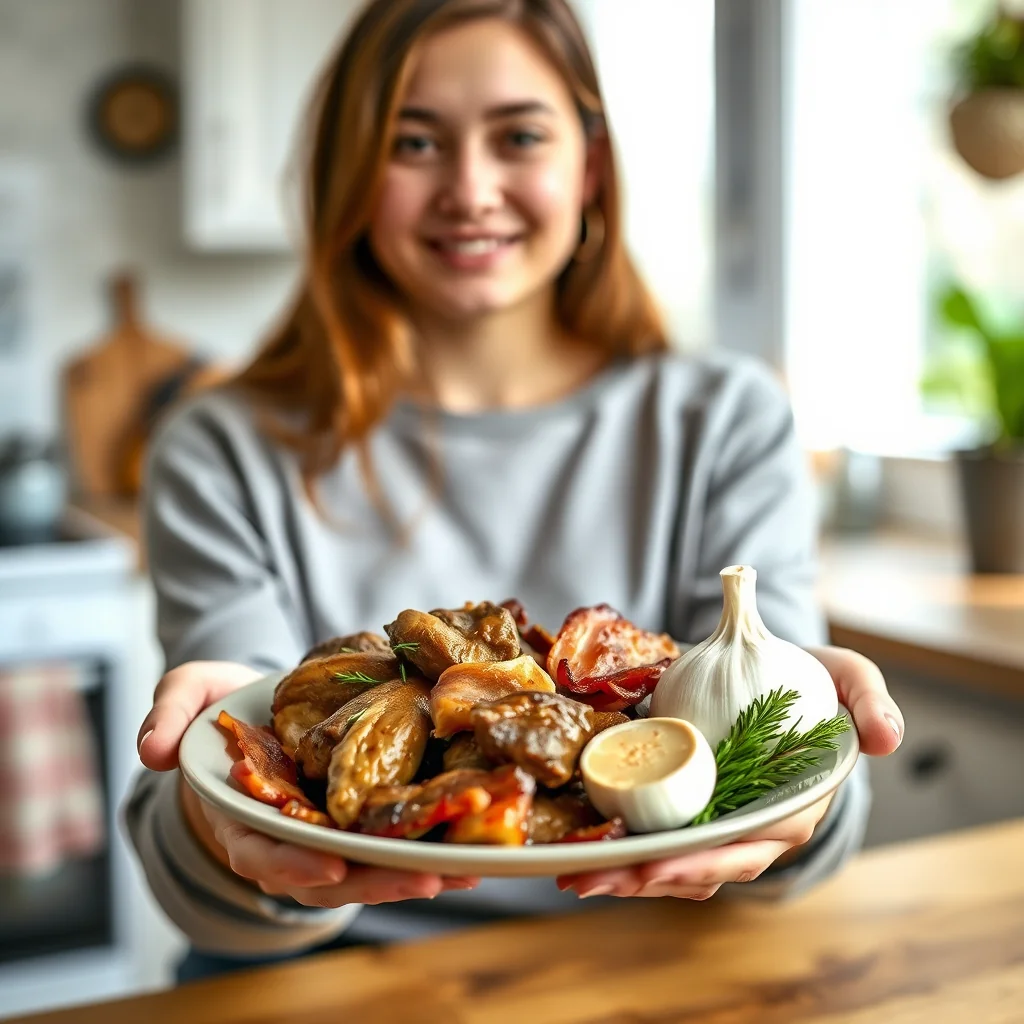
Ingredients
Method
- Set a large pan over medium-high heat; add the 1.5 oz (42g) chopped bacon and cook for about 3 minutes.
- Stir in the 0.1 oz (3g) minced garlic, 8 oz (225g) diced onion, and 0.25 cups (56g) of coconut oil, cooking for 4 minutes more.
- Trim the 8 oz (225g) chicken livers by cutting out any tough white connective parts, and add the livers to the pot.
- Continue cooking for about 10 minutes, or until the livers are fully cooked through with no pink remaining inside.
- Stir in the 3 tbsp. (45ml) sherry, 0.1 tsp. (0.5g) black pepper, 4 tbsp. (15g) parsley, 0.1 tsp. (0.5g) nutmeg, and 0.1 tsp. (0.5g) sea salt.
- Remove the pan from the heat, transfer the mixture to a food processor or blender, and process until very smooth.
- Transfer the blended mixture to a serving dish and smooth out the top.
- Melt the remaining 0.5 cups (114g) of coconut oil and evenly pour it over the pâté to create a protective seal.
- Refrigerate, covered, until the oil layer hardens, and enjoy as a snack on lettuce leaves, on celery sticks, or as is.
- Do Not Overcook the Livers: For a silky, creamy texture, cook the livers just until they lose their pinkness in the center. Overcooking liver leads to a grainy, crumbly texture and a harsh, metallic flavor.
- Let the Flavors Marry: While you can technically eat it once the oil hardens, pâté tastes infinitely better on day two.
- Letting it rest in the refrigerator for 24 hours allows the sherry, garlic, and nutmeg to deeply infuse the spread.
Soak in Dairy or Acid (Optional): If you are sensitive to the strong flavor of liver, soak the raw livers in almond milk (or regular milk if not strictly paleo) with a splash of lemon juice for 30 minutes before cooking. This neutralizes the sharp, metallic taste.
Master the Fat Seal: The melted coconut oil poured over the top isn't just for presentation; it acts as an airtight seal. This prevents the pâté from oxidizing (turning gray) and significantly extends its shelf life in the fridge.